
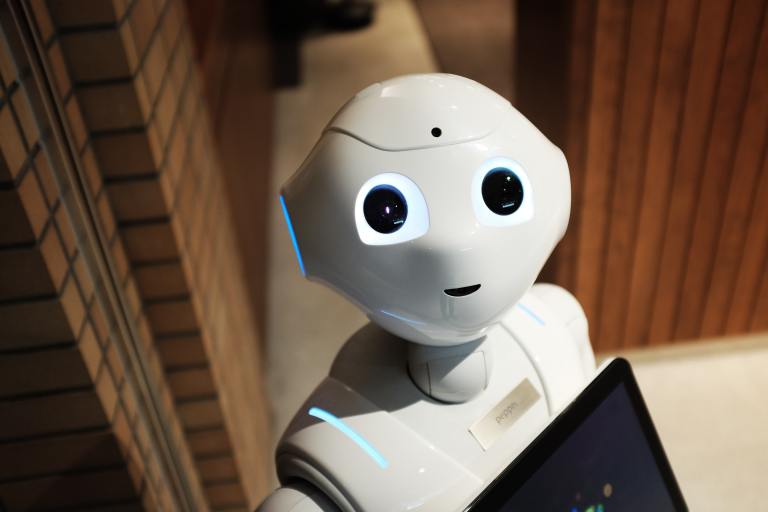
Unless you’ve been living in the deepest Amazon for the past few weeks, you’ve probably heard about ChatGPT. An AI (Artificial Intelligence) tool that claims to be able to produce human-like text, ChatGPT has been making waves in marketing, education and creative circles. While the technology sector hails ChatGPT and similar AI as a disruptor, its critics are concerned about the ethical dilemmas it raises. So what is ChatGPT? Is it coming to steal our jobs? And is it worth your business investing in AI?
What is ChatGPT?
Developed by OpenAI, a for-profit company founded by Elon Musk and Sam Altman and financially backed by Microsoft to the tune of a reported $10billion or more, ChatGPT is a large language AI model capable of replicating the kind of written text produced by humans. It does this by using so-called transformer architecture to comb through written works on the internet. It then creates copy in response to questions or prompts.
Sounds great, right? Using AI to produce something that would until now only a human being could produce might seem more efficient and more cost effective but what’s the reality of bot-created content?
ChatGPT: The Pros
ChatGPT can automate repetitive tasks: from what we’ve seen, tools like ChatGPT are strongest when used in repetitive tasks such as answering FAQs on a web page. This is the kind of task that requires minimal human skill and nuance, making it difficult for AI to get wrong.
ChatGPT offers fast results: AI-produced content may come into its own for those companies who require bulk content to be created quickly and where accuracy isn’t paramount. This could save time for smaller teams who don’t have the workforce or skill to create large amounts of marketing content.
ChatGPT could create innovative content: fed a large dataset, a tool like ChatGPT can create unique content that’s almost indistinguishable from human-created content, not just basic text but essays, programming code or even poetry. However, it requires a lot more finetuning before it becomes the next Seamus Heaney.
ChatGPT can individualise marketing content: potentially valuable for creating on-page web marketing text, a tool like ChatGPT can create personalised content based on a user’s profile and browsing habits. If harnessed effectively this could help to improve conversion rates.
ChatGPT: The Cons
ChatGPT doesn’t guarantee quality: one of the key issues experts have with machine content creation is that for the foreseeable future it will require significant human oversight. AI is only as good as the human using it. Error-prone AI will require a human with editorial skills to QA its work, negating the purpose of machine automation.
ChatGPT doesn’t understand brand tone: GPT learning requires existing data to be fed to it (in this case previously created written content) which means that, unlike a human writer, it can’t create tone of voice. Additionally, in order to stick to a pre-determined style, it requires a huge amount of (human) input.
ChatGPT is prone to bias: one of the most sinister issues surrounding machine learning is its inability to distinguish between truth and lie and to recognise bias. At its worst AI could be used to spread fake news. The concern for you as a business owner? Errors and untruths could be amplified by your content.
ChatGPT struggles with long form content:
Need 1000 words? Those who’ve tried out ChatGPT have found that while it’s potentially useful for short TL;DR summaries, it can struggle with long form pieces. In some cases it simply doesn’t return the prerequisite word count. In others, it makes glaring spelling and grammatical errors. And in many cases it doesn’t pass the plagiarism test.
ChatGPT has no empathy: we’ve all seen the dead-eyed images created by AI art generators. Falling deep into the uncanny valley there’s something off about these seemingly accomplished pictures. The glaring difference between a machine’s take on Frida Kahlo and a portrait created by Frida herself? Soul. Likewise, an AI writer may be able to produce decent content but, it’s humans that give content the heart and humour that makes a brand connect with its customer.
The glaring difference between a machine’s take on Frida Kahlo and a portrait created by Frida herself? Soul. Likewise, an AI writer may be able to produce decent content but, it’s humans that give content the heart and humour that makes a brand connect with its customer.
Should you be using ChatGPT?
So, should ChatGPT be part of your business model moving forward? By all means give it a whirl and see what it can do. If nothing else you’re bound to get a good laugh out of it. But is AI ready to lead your content team? Probably not. As with any new technology, ChatGPT has a lot of issues still to iron out and moving wholesale to machine content creation at this stage would be a huge risk for any company.
Is AI ready to lead your content team? Probably not.
In addition to a high likelihood of errors in unproven software, switching to ChatGPT now is likely to be a costly endeavour, requiring more human work than it saves. Right now we foresee that ChatGPT will, at best, be useful for creating the framework for articles, potentially saving some time for human writers and editors.
Not only will the cost of implementing and learning to work with this new software be high, but there’s future costs to consider too. It wasn’t so long ago that we were stung by Google’s decision to start charging businesses for their analytics software. It’s a smart model – give businesses something for just long enough that they become reliant then hike up the price just as they can’t manage without it. It’s fair to assume that a tool like ChatGPT might follow a similar path and with that in mind are you sure firing your copywriting team is something you want to do today?
Could (And Should) ChatGPT Replace Humans?
Some creatives are understandably worried about the impact of tools like ChatGPT on their livelihoods. However, experts say they’ve little cause to worry. As things stand, ChatGPT may be a powerful tool in many ways but the magic only really happens with smart humans holding its cold robotic hand. Take, for example, the internet-famous example of ChatGPT’s biblical tale of a peanut butter sandwich jammed into a VCR. Yes, it’s funny, but the thing that makes it so isn’t the writing, it’s the concept. And the concept? Well, that’s all human.

Plus, as one commentator rightly cautioned “technically it doesn’t say to unplug the VCR anywhere in there, so it could be construed as harmful advice. 😂⚡️”
Among the most significant issues for you and your marketing team is that ChatGPT is not yet capable of replicating your brand’s tone of voice. With so many companies already sounding spookily similar, do you really want to strip the uniqueness that your existing writers have created out of future content?
Additionally, AI is not yet able to replicate the kind of market knowledge your team has. ChatGPT isn’t able to understand your products and know your customers inside out. It can’t understand the regulations that your business is subject to either, making it particularly limiting for those businesses working in complex or tightly regulated areas where a simple error in a product description could come at a high human or financial cost.
So should ChatGPT replace your human marketing team? Probably not. Or at least not for a long while yet.
References
https://www.reuters.com/technology/microsoft-invest-more-openai-tech-race-heats-up-2023-01-23/
https://www.thinklikeapublisher.com/human-magic-determines-the-success-of-ai-content/
https://www.theatlantic.com/technology/archive/2022/12/openai-chatgpt-chatbot-messages/672411/
https://www.context.news/ai/what-is-chatgpt-and-will-it-steal-our-jobs


One Response